
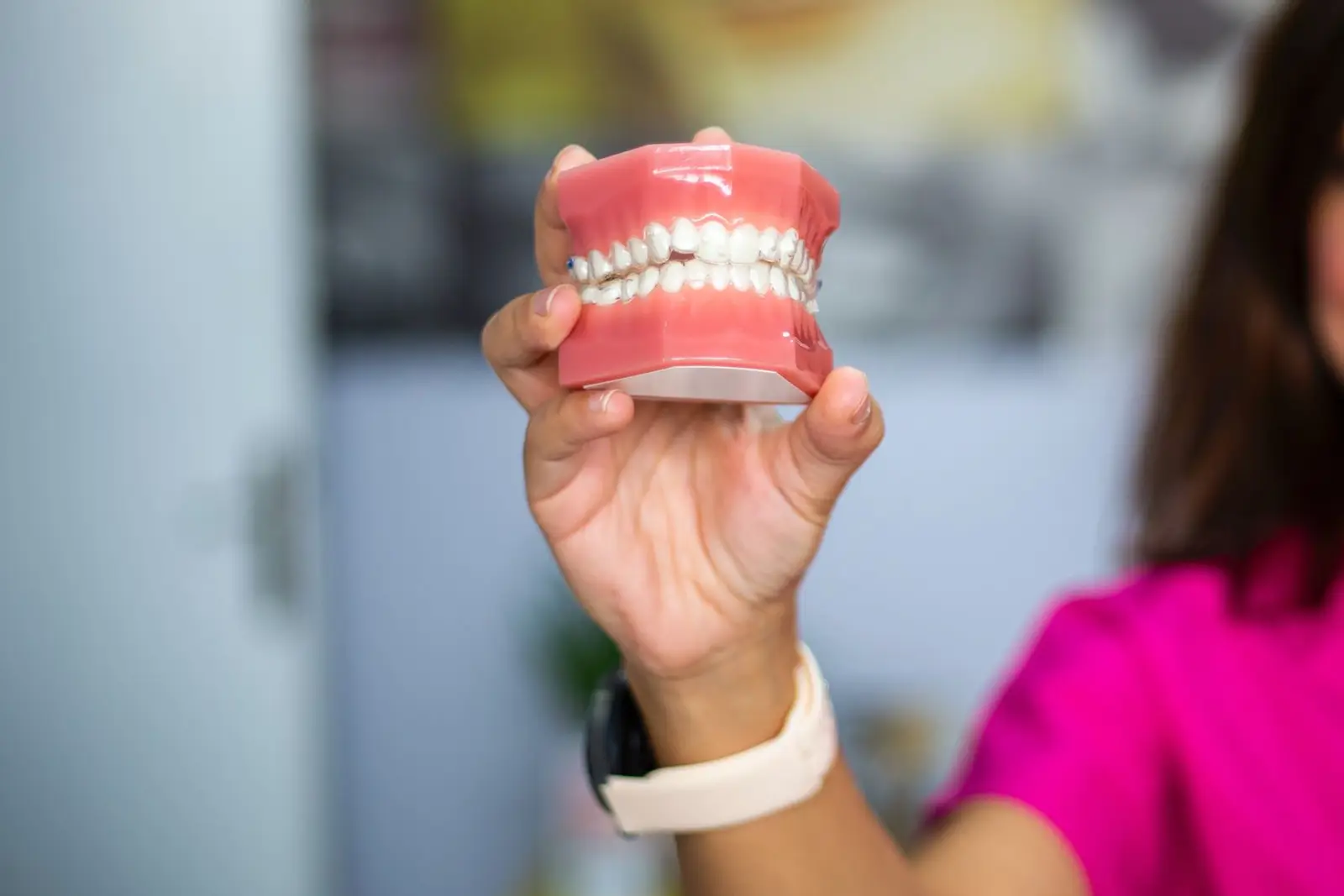
Complete Dentures in Sainte-Julie
Rediscover your smile and quality of life with complete dentures tailored to your needs
Have you lost all of your teeth or need to have them extracted? Our denturology clinic in Sainte-Julie offers complete, comfortable and affordable solutions to regain a functional and esthetic smile. We offer traditional complete dentures as well as implant-supported options for maximum stability.
What Is a Complete Denture?
A complete denture, commonly called a full denture, is a removable or fixed appliance that replaces all the teeth in one jaw (upper or lower, or both). Unlike partial dentures which replace only a few missing teeth, complete dentures fully restore your dental arch when all natural teeth are absent.
These prosthetic appliances consist of a pink acrylic resin base that mimics the natural appearance of gums, onto which artificial teeth in porcelain or acrylic are fixed. The complete denture rests directly on gum tissue and residual jawbone, creating a natural suction effect that helps keep it in place.
Main functions of complete dentures:
- Restore the ability to eat and chew normally
- Improve speech and pronunciation
- Support facial muscles to prevent facial sagging
- Regain an esthetic and natural smile
- Preserve jawbone structure
Types of Complete Dentures
Traditional Removable Complete Dentures
Removable complete dentures are the classic solution for replacing all the teeth in one or both jaws. These dentures can be removed daily for cleaning and maintenance, ensuring optimal hygiene.
Features:
- Held in place by suction (upper jaw) or anatomical adaptation (lower jaw)
- Custom fabrication in the laboratory based on impressions of your mouth
- Pink acrylic base mimicking natural gums
- Artificial teeth available in different shades and shapes
- Option of metal-reinforced base for greater durability
Benefits:
- No surgery required
- Rapid fabrication process (3 to 5 appointments)
- Easy to clean and maintain
- Can be repaired or adjusted if necessary
Ideal for: Patients seeking an economical solution, those with good bone density or who do not wish to undergo surgery.
Complete Dentures on Dental Implants
Implant-supported dentures represent the most stable and comfortable solution for replacing all of your teeth. Titanium implants are surgically inserted into the jawbone and serve as a solid anchor for your denture.
Types of implant-supported dentures:
1. Implant-stabilized removable denture (2 to 4 implants)
- Denture that snaps onto implants but remains removable
- Requires 2 to 4 implants per arch
- Considerably improved stability compared to a traditional denture
- More affordable than complete fixed solutions
2. Complete fixed denture on implants (4 to 6 implants)
- Denture permanently screwed onto implants
- Can only be removed by your denturist
- Feel and function similar to natural teeth
- All-on-4 or All-on-6 solution depending on the number of implants
Benefits of implant-supported dentures:
- Maximum stability – no movement during chewing
- Superior comfort – no false palate on the upper jaw
- Better chewing ability (up to 90% of natural teeth efficiency)
- Preservation of jawbone (prevents bone resorption)
- Exceptional durability (more than 15 years with proper care)
- No need for denture adhesive
- Natural appearance and feel
Ideal for: Patients seeking the highest-performing solution, those with sufficient bone density, or those wishing to avoid the inconveniences of removable dentures.
The Process for Obtaining Complete Dentures
Fabrication Steps (Removable Dentures)
Appointment 1 – Consultation and Initial Examination Our denturist performs a complete examination of your mouth, evaluates the health of your gums and residual bone, discusses your specific expectations and needs, and presents treatment options with cost estimates.
Appointment 2 – Impressions We take precise impressions of your jaws and gums using specialized materials. These impressions will serve as the basis for creating models on which your dentures will be fabricated.
Appointment 3 – Esthetic Selection You select the shape, shade and arrangement of your new artificial teeth. We also determine the relationship between your upper and lower jaws to ensure proper alignment.
Appointment 4 – Try-In You try on a wax prototype of your dentures. This is the opportunity to verify esthetics, occlusion and comfort before final fabrication. Adjustments can be made at this stage.
Appointment 5 – Delivery and Adjustments Your final dentures are fitted. We verify fit, occlusion and comfort. You receive complete instructions on using, maintaining and caring for your new dentures.
Follow-up appointment (24-48 hours after delivery) A check-up appointment is scheduled to make necessary adjustments once you have worn your dentures daily.
Total process duration: 3 to 6 weeks depending on your situation
Process for Implant-Supported Dentures
Phase 1 – Evaluation and Planning (1-2 weeks)
- Complete clinical examination and panoramic X-rays
- 3D scan of your jaw to precisely plan implant positioning
- Discussion of treatment plan and costs
- Coordination with the surgeon for implant placement
Phase 2 – Implant Surgery (1 day) A dental surgeon or maxillofacial surgeon surgically places the dental implants in your jaw. The procedure is performed under local anesthesia or sedation according to your needs.
Phase 3 – Healing Period (3 to 6 months) The implants fuse with your jawbone in a process called osseointegration. A temporary denture can be worn during this period.
Phase 4 – Fabrication of Final Denture (2-4 weeks) Once the implants are integrated, we take precise impressions and fabricate your definitive denture that will be attached to your implants.
Phase 5 – Installation and Adjustments The final denture is installed and adjusted to ensure optimal comfort and function.
Total process duration: 4 to 8 months
Advantages of Choosing Our Clinic in Sainte-Julie
Local Expertise on the South Shore
Established in Sainte-Julie, we understand the specific needs of South Shore residents. Our easily accessible location from Sainte-Julie, Saint-Bruno-de-Montarville, Boucherville, Longueuil and Varennes allows you to receive quality care close to home, without travelling to Montreal.
State-of-the-Art Technology
- 3D digital impressions: Maximum precision and increased comfort during impression taking
- Computer-aided design (CAD/CAM): Optimal customization of your dentures
- On-site dental laboratory: Rapid fabrication and immediate adjustments
- Latest-generation biocompatible materials: Superior comfort, durability and esthetics
Personalized Service and Attentive Follow-Up
- Free initial consultation with no obligation
- Attentive listening to your needs and concerns
- Clear explanation of all treatment options
- Support throughout the adaptation period
- Emergency service for adjustments if discomfort occurs
- Regular follow-up to ensure the longevity of your dentures
Adaptation and Care of Your Dentures
Adaptation Period
It is normal to require an adaptation period of 2 to 4 weeks when you receive new complete dentures. Here is what to expect:
First 24-48 hours:
- Foreign-body sensation in the mouth
- Increased saliva production
- Slight speech difficulty
- Sense of fullness
First week:
- Progressive improvement in comfort
- Better adaptation of tongue and muscles
- Possible pressure points requiring adjustments
- Recommendation to start with soft foods
After 2-4 weeks:
- Significantly improved comfort
- Practically normal speech
- Ability to eat firmer foods
- Natural feeling when wearing dentures
Tips to facilitate adaptation:
- Wear your dentures as much as possible (even at night the first few days)
- Practice reading aloud to improve speech
- Start with tender foods then progress gradually
- Chew on both sides simultaneously to balance pressure
- Do not hesitate to return for adjustments if persistent discomfort
Daily Care and Cleaning
Proper care extends the lifespan of your dentures and maintains your oral health.
Daily cleaning routine:
- After each meal: Rinse your dentures under running water to remove food debris
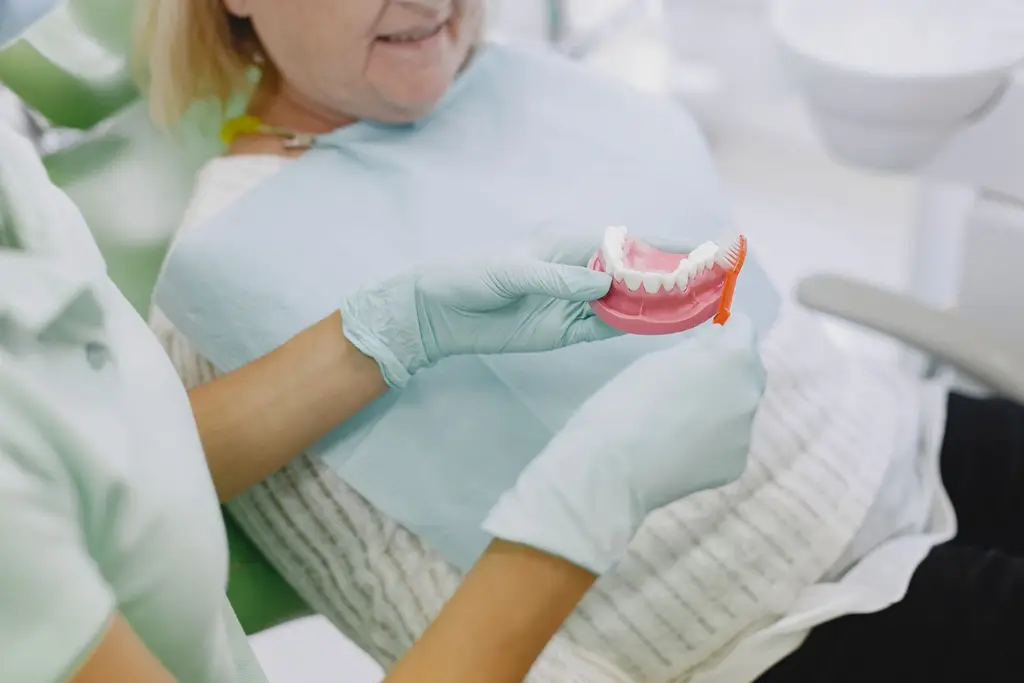
- Morning and evening: Gently brush your dentures with a soft toothbrush and mild soap (NOT regular toothpaste which is too abrasive)
- Each night: Remove your dentures and soak them in a specialized cleaning solution or lukewarm water
- Gum brushing: Gently brush your gums, tongue and palate with a soft brush to stimulate circulation
Recommended products:
- Effervescent denture cleaners (Polident, Efferdent)
- Denture-specific brush
- Antibacterial soaking solution
Avoid:
- Boiling water (can warp acrylic)
- Abrasive toothpaste (scratches the surface)
- Whitening products (damage the colour)
- Letting dentures dry out (they can warp)
Frequently Asked Questions
How long do complete dentures last?
Traditional removable dentures generally last 5 to 7 years with proper care. However, even if the dentures themselves remain in good condition, the shape of your jaw changes over time due to natural bone resorption. A relining (base adjustment) may be necessary every 2-3 years to maintain a good fit. Implant-supported dentures have a longer lifespan, potentially reaching 15 to 20 years or more, because implants preserve the jawbone.
Are complete dentures painful?
Well-fitted dentures should not cause pain. During the initial adaptation period of a few days, you may feel slight discomfort or pressure points, but this is normal and temporary. If you experience persistent pain or friction areas after the adaptation period, an adjustment by your denturist is necessary and will resolve the problem. Implant-supported dentures generally offer more comfort from the start.
Will I be able to eat normally with complete dentures?
Yes, after the adaptation period, you will be able to eat most foods. With traditional removable dentures, you will regain approximately 60-70% of your original chewing ability. It is recommended to cut food into small pieces and avoid extremely hard or sticky foods. Implant-supported dentures allow you to regain up to 90% of the chewing efficiency of natural teeth, letting you eat practically anything you want.
Will my dentures be visible? Will they look natural?
Modern dentures are designed to be extremely esthetic and natural. We customize the shape, shade and arrangement of artificial teeth so they harmonize with the shape of your face, your complexion and your personality. The acrylic base faithfully mimics the appearance of natural gums. When well fabricated and fitted, most people will not notice that you are wearing dentures.
Can I sleep with my dentures?
Generally, it is recommended to remove your dentures at night to allow your gums to rest and promote better oral hygiene. However, during the first few days after fitting, your denturist may advise you to wear them 24/7 to facilitate adaptation. Fixed implant-supported dentures, on the other hand, remain in place permanently like natural teeth.
Will I need to use denture adhesive?
Well-fitted dentures should normally not require adhesive, especially for the upper denture which benefits from better natural suction. However, adhesive can be useful for the lower denture which has less retention, or to temporarily increase confidence during social events. If you need adhesive regularly, this may indicate that your dentures require an adjustment. Implant-supported dentures completely eliminate the need for adhesive.
How long does it take to get used to dentures?
The adaptation period varies from person to person, but most patients get used to their new dentures in 2 to 4 weeks. The first few days can be the most difficult with a sense of fullness, increased saliva production and speech difficulties. These symptoms diminish quickly. After one month, the majority of patients wear their dentures comfortably and naturally. Implant-supported dentures generally have a shorter adaptation period because they are more stable.
What should I do if my dentures break?
If your dentures crack or break, contact us immediately. Do not try to repair them yourself with ordinary glue, as this could damage them further or create irritating surfaces. Our on-site laboratory allows us to repair most breaks the same day or within 24 hours. For dentures under warranty, repairs are covered according to your warranty terms.
Can my dentures change the shape of my face?
Well-designed dentures support your facial muscles and prevent facial sagging that occurs after tooth loss. They restore volume and structure to your face, often giving you a more youthful appearance. If you have worn old poorly fitted dentures or have been without teeth for a long time, your new dentures can indeed considerably improve the esthetics of your face.
Can I get dentures immediately after my teeth are extracted?
Yes, we can fabricate immediate dentures that are placed the same day your remaining teeth are extracted. These temporary dentures allow you to never be without teeth and facilitate healing. However, since your gums and bone remodel after extractions, several adjustments will be necessary. After 3 to 6 months of healing, more precise definitive dentures will be fabricated to replace the immediate dentures.